Industrial Sensor Applications: The Five Senses of a Modern Factory – Summary
Industrial Sensor Applications: The Five Senses of a Modern Factory – Summary
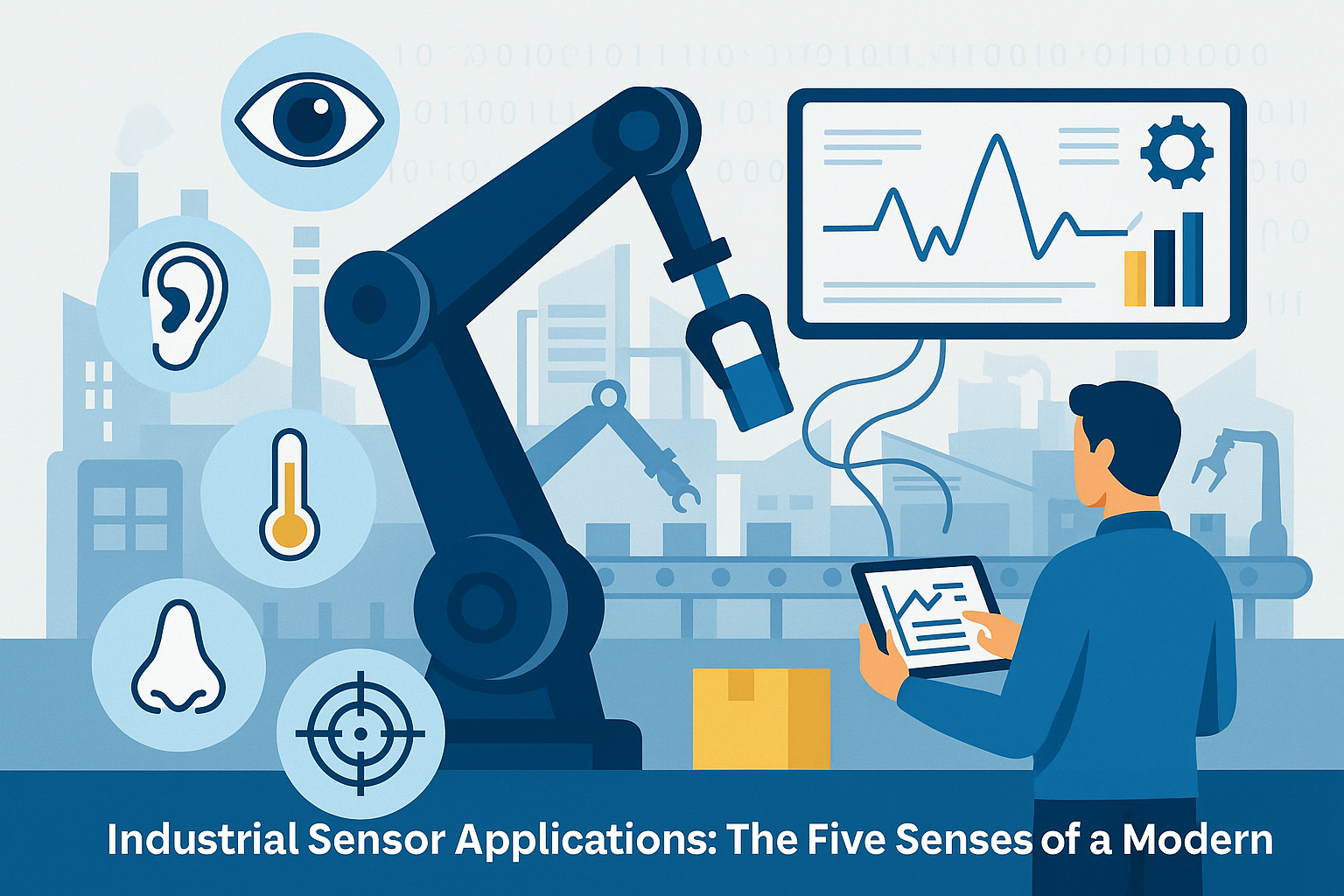
Modern industrial factories are evolving into intelligent, sensor-driven environments that emulate human senses to enhance safety, efficiency, and productivity. This transformation is propelled by advancements in microelectronics and micromachining, leading to the development of high-performance, intelligent, and cost-effective sensors.
These sensors are integral to the Industrial Internet of Things (IIoT) and Industry 4.0 paradigms, enabling real-time monitoring and data collection across various factory operations. By integrating sensors with innovative software solutions, factories can analyze data to make informed decisions, improving operational efficiency and reducing downtime.
Key Sensory Technologies Include:
- Vibration Monitoring: Utilizing sensors to detect equipment vibrations, allowing for early identification of potential issues and facilitating predictive maintenance strategies.
- Environmental Sensing: Monitoring parameters such as temperature, humidity, and air quality to ensure optimal working conditions and equipment performance.
- Visual Inspection: Employing cameras and image processing algorithms for quality control and defect detection in manufacturing processes.
The integration of machine learning (ML) and artificial intelligence (AI) further enhances the capabilities of these sensors, enabling factories to not only collect data but also to analyze and act upon it autonomously.
For readers interested in a deeper dive and real-world use cases, you can access the full original article below:
👉 Read the Full Article: Five Senses of an Industrial Factory
About the Author:
Jay Esfandyari, Ph.D., is the founder of CKing Sensors LLC and a recognized expert in the sensor industry, with several publications on MEMS sensors and their applications.